
Quantum computing in Buffalo & Western New York
Buffalo isn't just rust-belt nostalgia and chicken wings anymore. Western New York is quietly building a quantum computing ecosystem — anchored by the University at Buffalo — and this page is your local guide to what is happening, why it matters, and how students, businesses and educators can get involved.
The University at Buffalo Quantum Institute
In November 2025, the University at Buffalo launched a Quantum Institute with an initial $1 million investment. Rather than tucking quantum work inside a single department, UB deliberately built the institute to unite scholars from physics, engineering, computer science, materials science, chemistry and beyond. That cross-disciplinary design is not an accident: quantum computing sits exactly at the intersection of those fields, where physicists who understand qubits need engineers who can build control systems, materials scientists who can fabricate devices, and computer scientists who can design algorithms.
The institute builds on research strengths UB already had, including centers focused on computational research, advanced semiconductor technologies, and materials informatics. The combination that quantum work demands — serious computation, nanofabrication, and advanced instrumentation — is precisely what a large public research university like UB can provide. In other words, Buffalo is not starting from zero; the Quantum Institute concentrates and amplifies capabilities that were already in the region.
Why this matters locally: a university-anchored institute attracts faculty, grant money, graduate students and industry attention. Over time that tends to spin out startups, jobs and partnerships — the same pattern that turned other mid-size cities into recognized technology clusters.
Fresh quantum research coming out of WNY
The work is already producing results. A UB-led study published in January 2026 found that light and matter don't always rush to thermal equilibrium — a phenomenon called delayed thermalization. That delay offers a useful "temporal window" to preserve and process quantum information in emerging neutral-atom quantum computers, which use light and atoms to perform calculations. In plain terms: one of the hardest parts of building a quantum computer is keeping fragile quantum information stable long enough to compute with it, and this research points to conditions where that information survives longer than expected. Findings like this feed directly into the global race to scale up quantum machines. You can follow developments, with links to original sources, on our quantum computing news page.
Why Buffalo, and why now
Several ingredients are converging at the same moment, which is what makes this more than wishful thinking:
- A research anchor: UB is a large public research university with the disciplinary breadth quantum computing requires, plus the lab infrastructure to back it up.
- State-level momentum: New York has invested heavily in technology and semiconductor manufacturing, which are the physical foundations that quantum hardware ultimately depends on.
- Cost and talent: Western New York offers affordable space, a lower cost of living than coastal tech hubs, and a steady pipeline of STEM graduates from UB and other regional schools.
- Timing: the field is still early enough that a region can establish itself as a recognized hub before the map is drawn. Cities that move now have an outsized chance to matter later.
Buffalo's emerging quantum computing ecosystem
A healthy technology cluster is more than one institute. Here is how the pieces fit together in Western New York.
The university core
UB provides the research engine: faculty, graduate students, labs and the Quantum Institute itself. University research is where most foundational quantum advances happen, and it is the magnet that draws talent and funding into the region.
Semiconductors and advanced manufacturing
Quantum hardware is built on the same broad foundations as advanced electronics: cleanrooms, nanofabrication and precision instrumentation. New York's continued investment in semiconductors strengthens exactly the supply chain and skills base that quantum hardware needs.
A regional talent pipeline
UB and neighboring colleges graduate physicists, computer scientists and engineers every year. As quantum courses and research opportunities expand, more of that talent can build careers without leaving Western New York.
Community and education
Public understanding matters too. Libraries, K–12 STEM programs and approachable resources (like this site) help residents engage with quantum computing rather than treating it as something that happens elsewhere.
Quantum computing careers and jobs in Western New York
It is worth being honest: the local quantum job market is early. Most roles today are research-oriented — faculty positions, postdocs, graduate assistantships — rather than rows of "quantum engineer" listings at local companies. But the adjacent opportunities are real and growing. Skills in quantum computing overlap heavily with high-demand fields: software engineering (especially Python and frameworks like Qiskit), data science, electrical engineering, optics and photonics, cryogenics, and semiconductor fabrication.
For someone in Buffalo thinking about the future, the practical move is to build transferable skills now — programming, linear algebra, and hands-on experience with quantum SDKs — so you are ready as the ecosystem matures. Even if your eventual job is in classical software or hardware, quantum literacy is becoming a differentiator. Our learn quantum computing page lists resources to start that journey.
How to get involved with quantum computing in Buffalo
Students and the curious
Explore physics, computer science, engineering, materials science or chemistry at UB, follow the Quantum Institute's events and talks, and start hands-on with free tools like IBM Qiskit. If you are brand new, begin with a plain-English explainer and a beginner book before diving into the math. Curiosity and consistency matter more than a perfect background.
Local businesses
You do not need to own a quantum computer to start. Identify whether your hardest problems look like optimization, simulation, or security — the areas quantum computing is most likely to help with — and follow regional developments so you are ready as the technology matures. Cloud platforms already let teams experiment with real quantum hardware without buying any.
Educators and community leaders
There is growing demand for approachable quantum education in WNY classrooms and libraries. Plain-language resources, gift books for curious kids, and simple demonstrations are an easy on-ramp. See our Learn & Shop page for classroom- and gift-friendly options.
Have a Buffalo quantum tip? A new lab, course, talk, hire, startup or grant in Western New York? Get in touch — we are building the regional record as it happens.
Quantum computing and New York State's tech corridor
Buffalo's quantum momentum does not exist in isolation. Over the past decade, New York State has invested heavily in advanced technology and, in particular, in semiconductor manufacturing — the same industrial base that quantum hardware ultimately depends on. Major semiconductor investments across upstate New York are strengthening cleanroom capacity, supply chains and the skilled workforce that quantum devices require, from precision fabrication to cryogenic and laser systems.
That statewide push gives Western New York something many aspiring quantum regions lack: a credible path from research to hardware. A university institute supplies the science and the talent; a maturing semiconductor and advanced-manufacturing sector supplies the means to actually build and scale devices. When you combine UB's cross-disciplinary research with New York's industrial investment and the region's affordability, Buffalo's quantum ambitions start to look less like a slogan and more like a strategy. For residents and students, the practical takeaway is that quantum-adjacent skills — physics, software, electronics, optics and fabrication — are likely to stay in demand across the corridor for years to come.
Go deeper on quantum computing
Some links below are Amazon affiliate links. If you buy through them, this site may earn a small commission at no extra cost to you. Learn more.
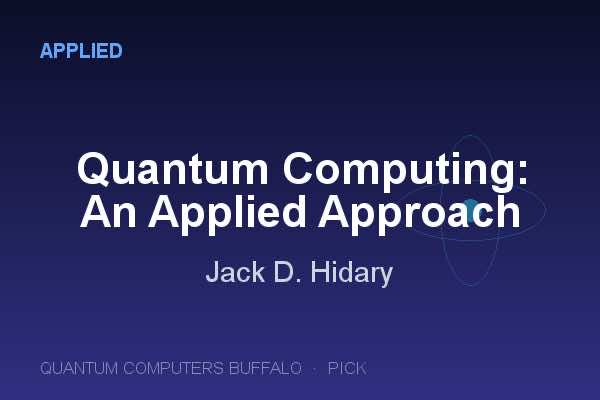 Applied
Quantum Computing: An Applied Approach
Bridges concepts and real coding with Qiskit & Cirq — great for students moving from theory to practice.
Check price on Amazon (opens in a new tab)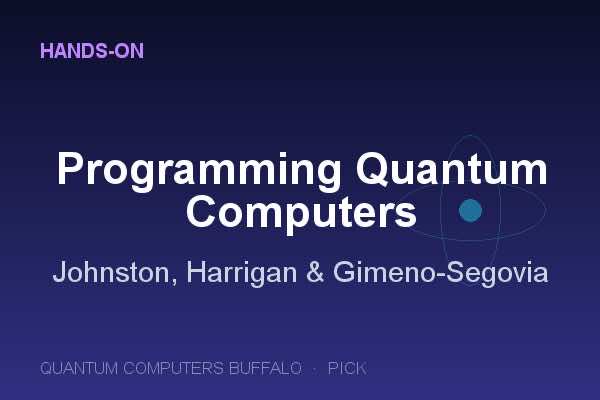 Hands-on
Programming Quantum Computers
A practical, example-driven O'Reilly guide to actually writing quantum programs.
Check price on Amazon (opens in a new tab)Buffalo quantum computing FAQ
Does the University at Buffalo have a quantum computing program?
Yes. In November 2025 the University at Buffalo launched a Quantum Institute with an initial $1 million investment, uniting researchers across physics, engineering, computer science, materials science and chemistry, and drawing on UB centers for computational research and advanced semiconductor technologies.
Why is Buffalo becoming a quantum computing hub?
Western New York combines a major research university (UB), strengths in computation, nanofabrication and advanced instrumentation, and New York State's broader investment in technology and semiconductors. Together these create the ingredients for a regional quantum research and education ecosystem.
How can students get into quantum computing in Buffalo?
Students can pursue physics, computer science, engineering, materials science or chemistry at UB, follow the UB Quantum Institute's programs and events, and build skills with free tools like IBM Qiskit. Beginner books and online courses are a great starting point before formal study.
Are there quantum computing jobs in Western New York?
The local quantum job market is early but growing, centered on university research roles, graduate positions and adjacent fields like semiconductors, software and instrumentation. Building quantum skills now positions you for roles as the ecosystem matures.