What is quantum computing?
Qubits, superposition and entanglement — without the math headache. A beginner-friendly explainer that builds real intuition step by step.
Buffalo & Western New York
Plain-English explainers, local news from the University at Buffalo Quantum Institute, and hand-picked resources to help you learn the technology shaping the next era of computing.
Quantum computing is moving out of the physics lab and into the headlines — and, increasingly, into Buffalo. Quantum Computers Buffalo is an independent guide built to make this famously confusing field understandable, and to connect it to what is happening right here in Western New York. Whether you are a curious resident, a University at Buffalo student, a local business owner, or an educator looking for classroom-ready explanations, this site is designed to meet you at your level.
We do three things. First, we explain quantum computing in plain English, so anyone can understand qubits, superposition and entanglement without a graduate degree. Second, we track local quantum computing news, especially developments at the University at Buffalo, and summarize them with links to the original sources. Third, we recommend the best books and learning resources for every level, from "I'm just curious" all the way to "I want to write quantum algorithms."
Qubits, superposition and entanglement — without the math headache. A beginner-friendly explainer that builds real intuition step by step.
The UB Quantum Institute, regional research strengths, and why Western New York is quietly becoming a quantum computing hub.
Quantum milestones and local Buffalo developments, summarized in plain English with sources you can verify.
Hand-picked books, hands-on coding guides and STEM gifts for every level — from curious beginner to working researcher.
Every phone and laptop today is a classical computer. It stores information as bits, and each bit is either a 0 or a 1. A quantum computer stores information as qubits, which can hold a blend of 0 and 1 at the same time thanks to a property called superposition. Qubits can also be entangled, so they behave as a coordinated system rather than as separate switches. Together, these properties let quantum computers explore many possibilities at once and solve certain problems far more efficiently than any classical machine.
That does not mean a quantum computer will replace your laptop. Quantum machines are specialized tools, not general-purpose replacements. They are most promising for a narrow but valuable set of problems: simulating molecules for drug discovery and battery design, optimizing complex logistics and finance problems, strengthening (and challenging) cryptography, and accelerating parts of machine learning. If you want the full, beginner-friendly version, read our guide to what quantum computing is.
For years, "tech in Buffalo" meant call centers and back-office work. That story is changing. In November 2025, the University at Buffalo launched a Quantum Institute with an initial $1 million investment, deliberately uniting scholars from physics, engineering, computer science, materials science and chemistry. A university-anchored institute is exactly the kind of seed that turns a mid-size city into a recognized technology cluster: it attracts faculty, grant funding, graduate students and, eventually, startups and high-skill jobs.
The research is already producing results. A UB-led study published in January 2026 explored a phenomenon called delayed thermalization, with implications for scaling up emerging neutral-atom quantum computers. For Western New York, this matters because the region is establishing itself early, while the entire field is still young. Read more on our quantum computing in Buffalo page, and follow developments through the news hub.
UB committed an initial $1 million to launch a Quantum Institute, uniting scholars across physics, engineering, computer science, materials science and chemistry.
A University at Buffalo–led study found light and matter don't always reach thermal equilibrium quickly — a finding with implications for scaling neutral-atom quantum computers.
New to the field? These two beginner favorites explain quantum computing without heavy math.
Some links below are Amazon affiliate links. If you buy through them, this site may earn a small commission at no extra cost to you. Learn more.
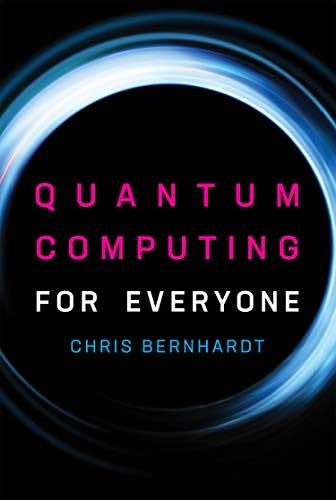 Beginner
A genuinely accessible introduction that builds the core ideas from the ground up with only high-school math.
Check price on Amazon (opens in a new tab) Beginner
Uses a simple visual "black box" approach to teach real quantum reasoning — no prior physics required.
Check price on Amazon (opens in a new tab)You keep seeing "quantum" in the news and want to understand what is real, what is hype, and why people in Buffalo are suddenly talking about it. Our explainers give you an honest, jargon-free picture — including the limitations the headlines often skip.
Quantum computing draws on physics, computer science, engineering, materials science and chemistry. If you are considering UB or already enrolled, our resources help you build intuition before the math, and point you toward hands-on tools like IBM Qiskit so you can start experimenting today.
You will probably never run your own quantum computer, but you can learn to recognize whether your hardest problems — optimization, simulation, security — are the kind quantum computing may eventually help with, and stay ahead as the technology matures.
Teachers, librarians and parents need approachable, accurate material. Our plain-English explanations and curated gift books make quantum computing classroom- and kitchen-table-friendly.
New to the vocabulary? Here are the quantum computing terms you will see most often across this site, each explained in plain English so the rest of our guides make sense.
A qubit, or quantum bit, is the basic unit of quantum information. Unlike a classical bit that must be 0 or 1, a qubit can hold a blend of both at once — the property that gives quantum computers their distinctive power.
Superposition is a qubit's ability to represent multiple states at the same time. With many qubits in superposition, a quantum computer can encode an enormous number of possibilities simultaneously rather than one at a time.
Entanglement links two or more qubits so their states are correlated, even at a distance. It lets qubits act as one coordinated system and is essential to the most powerful quantum algorithms.
A quantum gate is an operation that changes the state of one or more qubits — the quantum cousin of the logic gates inside a classical chip. An ordered sequence of gates forms a quantum circuit, which is essentially a quantum program.
Decoherence is the loss of fragile quantum information when qubits interact with their environment. Fighting decoherence with shielding, cooling and error correction is the central engineering challenge of building quantum computers.
Quantum advantage is the point at which a quantum computer solves a useful problem faster or better than any classical computer could. Demonstrating practical advantage on real-world problems is a major goal of the entire field.

Yes. The University at Buffalo launched a Quantum Institute in November 2025, uniting researchers across physics, engineering, computer science, materials science and chemistry. Buffalo and Western New York are an emerging regional hub for quantum computing research and education.
Quantum computing uses the rules of quantum physics — superposition and entanglement — to process information in ways ordinary computers cannot. Instead of bits that are only 0 or 1, quantum computers use qubits that can represent many possibilities at once, which can speed up problems like chemistry simulation, optimization and cryptography.
Start with a plain-English book such as Quantum Computing for Everyone by Chris Bernhardt, then experiment with free tools like IBM Qiskit. Our Learn & Shop page lists hand-picked books for beginners through advanced readers.
No. Quantum Computers Buffalo is an independent news and education site about quantum computing in Western New York. We are not a hardware vendor. Some links to books and learning resources are Amazon affiliate links.
A university-anchored quantum program tends to attract faculty, funding, graduate students and industry partners. Over time that can seed startups and high-skill jobs, which is why the UB Quantum Institute is significant for Western New York's tech economy.