
Learn quantum computing
Hand-picked books, hands-on coding guides and STEM gifts for every level — from "I'm curious" to "I write quantum algorithms." Below you will find a simple learning path, a quick buying guide, the best free resources, and our recommended books organized by skill level.
Some links below are Amazon affiliate links. As an Amazon Associate, this site earns from qualifying purchases — at no extra cost to you. Learn more.
How to start learning quantum computing
You do not need to be a physicist or a mathematician to begin. The most reliable path is to build intuition first, add a little math as you go, and get hands-on early so the ideas stick. Here is the sequence we recommend.
Step 1: Build intuition with a plain-English book
Start with an accessible overview that explains qubits, superposition and entanglement using words and pictures rather than dense equations. This gives you a mental model to hang everything else on. Quantum Computing for Everyone and Q Is for Quantum are the two best on-ramps.
Step 2: Get hands-on with free tools
Install nothing — just open IBM's free Qiskit in a browser and run your first small circuit. Seeing superposition and entanglement produce real measurement statistics turns abstract ideas into something concrete. Pair this with a hands-on book to guide your experiments.
Step 3: Add the math, then go deep
Once the concepts feel familiar, a little linear algebra and probability unlock the "why." From there, an applied textbook or the classic reference takes you toward real algorithms like Grover's and Shor's. Most people reach a satisfying working understanding without ever needing a graduate course.
Quick buying guide: which quantum computing book is right for you?
- Total beginner, no math anxiety: start with Quantum Computing for Everyone (Bernhardt).
- Visual learner who wants intuition fast: Q Is for Quantum (Rudolph).
- Self-studier ready for some math: Dancing with Qubits (Sutor) or Quantum Computing: An Applied Approach (Hidary).
- Programmer who learns by building: Programming Quantum Computers or Quantum Computing in Action.
- Researcher or grad student: the standard reference, Quantum Computation and Quantum Information (Nielsen & Chuang).
- Gift for a curious kid: the Quantum Physics for Babies board-book series.
Start here — best quantum computing books for beginners
 Beginner
Quantum Computing for Everyone
The clearest on-ramp for non-scientists. Builds the core ideas from scratch with only high-school math. If you read one book, make it this one.
Check price on Amazon (opens in a new tab) Beginner
Q Is for Quantum
A short, highly visual introduction that teaches genuine quantum reasoning using a simple "black box" picture. No prior physics needed.
Check price on Amazon (opens in a new tab) Beginner+
Dancing with Qubits
Bridges curious-beginner and serious-student. Reviews the math you need, then walks through how quantum computing really works.
Check price on Amazon (opens in a new tab)Go deeper — quantum computing textbooks
 Textbook
Quantum Computation and Quantum Information
The legendary standard reference — "Mike & Ike." Rigorous and comprehensive; the book most researchers learned from.
Check price on Amazon (opens in a new tab) Applied
Quantum Computing: An Applied Approach
Concepts plus real code (Qiskit & Cirq) and the math background you need. A favorite for self-study and university courses.
Check price on Amazon (opens in a new tab)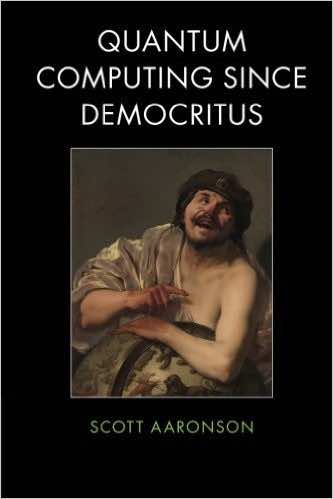 Big ideas
Quantum Computing Since Democritus
A witty, mind-stretching tour through computation, math and physics from one of the field's sharpest thinkers.
Check price on Amazon (opens in a new tab)Get hands-on — quantum programming & practice
 Hands-on
Programming Quantum Computers
A practical, example-driven O'Reilly guide that gets you writing and reasoning about real quantum programs.
Check price on Amazon (opens in a new tab) Hands-on
Quantum Computing in Action
A developer-focused, project-based path into quantum programming — great if you learn best by building.
Check price on Amazon (opens in a new tab) Free tool
IBM Qiskit (free)
Not a purchase — Qiskit lets you write and run quantum programs in your browser for free. Pair it with any hands-on book above.
Visit Qiskit (opens in a new tab)For kids & STEM gifts
 Ages 0+
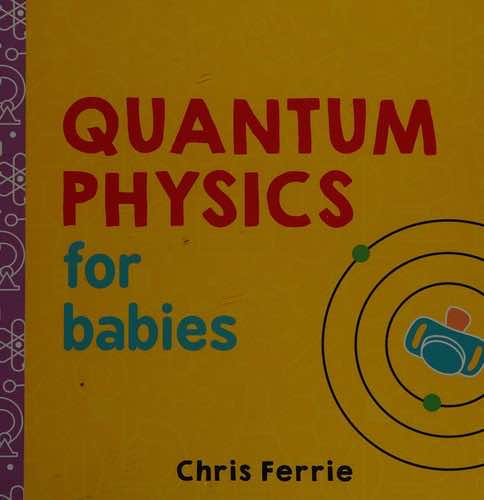
Quantum Physics for Babies
A best-selling board book that introduces big ideas with simple, colorful pictures. A fun, surprisingly popular gift.
Check price on Amazon (opens in a new tab)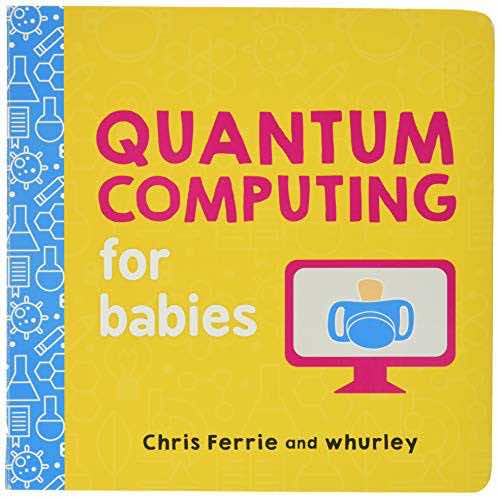 Ages 0+
Quantum Computing for Babies
The computing-focused companion in the same beloved series. Perfect for the future quantum engineer in your life.
Check price on Amazon (opens in a new tab) Gift
Gift
Quantum & physics gifts
Browse fun, science-y gifts for the quantum enthusiast — great for graduations, teachers and curious minds.
Shop gifts on Amazon (opens in a new tab)Why learn quantum computing now?
Quantum computing is still early, which is exactly why now is a smart time to learn it. The people who understand the fundamentals today will be the ones ready to build careers, advise businesses, and contribute to research as the field matures over the next decade. You do not need to bet your career on it to benefit: even a working understanding makes you a more versatile technologist, helps you separate genuine progress from hype, and opens doors in adjacent fields like cryptography, optimization, simulation and machine learning.
For students and professionals in Western New York specifically, learning quantum computing aligns with where the region is heading. With the University at Buffalo Quantum Institute anchoring local research, building quantum literacy now positions you to take advantage of courses, research opportunities and jobs as they appear. And because the best beginner resources are inexpensive or free, the cost of starting is low while the potential upside is high.
Online courses and communities
Books pair well with structured courses and active communities. Major platforms such as Coursera and edX host introductory and applied quantum computing courses, many taught by leading universities, and some can be audited at no cost. IBM publishes free, hands-on Qiskit tutorials and learning materials that take you from your first circuit to real algorithms. Beyond formal courses, the Qiskit community, open-source projects and online forums are welcoming places to ask questions, find study partners, and keep up with a fast-moving field. The winning formula for most beginners is simple: one clear book for intuition, one free tool for practice, and one community for momentum.
Best free ways to learn quantum computing
Books accelerate learning, but you can go a long way for free. IBM Qiskit offers free tutorials and a browser-based environment to run real quantum circuits. Many universities post free lecture notes, problem sets and recorded courses online. And our own plain-English guide to quantum computing is a no-cost starting point you can read right now. The ideal beginner combination is one accessible book plus Qiskit — structure plus hands-on practice.
Consistency beats intensity. Fifteen focused minutes a day — reading a few pages, then running a small Qiskit example — will take you further than occasional marathon sessions. Keep a running list of questions as you go, and do not worry if a concept does not click the first time; superposition and entanglement are genuinely counterintuitive, and even experts reach for analogies to explain them. Revisit the same idea from two or three sources and it will gradually settle into place. Above all, stay curious: quantum computing rewards people who enjoy puzzles more than people who memorize formulas.
Learning quantum computing: FAQ
What is the best book to learn quantum computing for beginners?
For most beginners, Quantum Computing for Everyone by Chris Bernhardt is the best starting point — it builds real understanding using only high-school math. Q Is for Quantum by Terry Rudolph is an excellent shorter, more visual alternative.
Do I need advanced math to learn quantum computing?
Not to start. Beginner books rely on basic math and intuition. To go deeper into algorithms you'll eventually want linear algebra and some probability, but you can build solid intuition first and pick up the math as you go.
Are the links on this page affiliate links?
Yes. As an Amazon Associate, Quantum Computers Buffalo earns from qualifying purchases. Using our links costs you nothing extra and helps support the site. See our affiliate disclosure for details.
What is a good quantum computing gift?
For kids, the Quantum Physics for Babies and Quantum Computing for Babies board books by Chris Ferrie are popular STEM gifts. For curious adults, Quantum Computing for Everyone or a fun quantum-themed item makes a great present.
Can I learn quantum computing for free?
Yes. IBM's Qiskit framework is free and lets you run quantum programs in a browser, and many universities publish free lecture notes and videos. Books simply give you a faster, more structured path; pairing a beginner book with Qiskit is an ideal start.