Quantum computing news

Milestones in quantum computing with a Western New York focus — summarized in plain English, always with a link to the original source. We add new entries as the Buffalo quantum story develops, and pair each one with context so the headlines actually make sense.

University at Buffalo launches a Quantum Institute

The University at Buffalo announced a new Quantum Institute, backed by an initial $1 million investment. The institute unites scholars across physics, engineering, computer science, materials science and chemistry, leveraging UB's strengths in computation, nanofabrication and advanced instrumentation to create a regional hub for quantum innovation and education.

Why it matters: a university-anchored institute is exactly how regional tech clusters start — it attracts faculty, funding, graduate students and industry attention to Western New York, and concentrates capabilities that were already scattered across campus.

Sources: UB News release (opens in a new tab) · About Quantum at UB (opens in a new tab)

UB-led study: "delayed thermalization" could help scale quantum computers

A University at Buffalo–led study found that light and matter don't always reach thermal equilibrium quickly. This delayed thermalization opens a valuable "temporal window" to preserve and process quantum information in emerging neutral-atom quantum computers, which use light and atoms to perform calculations — a finding with real implications for scaling the technology.

Why it matters: keeping fragile quantum information stable for longer is one of the central challenges in the field. Research like this feeds directly into the global race toward larger, more reliable machines — and it is happening in Buffalo.

Source: Quantum Zeitgeist coverage (opens in a new tab)

Got a Buffalo quantum tip? New lab, course, talk, hire, startup or grant in Western New York? Get in touch and help us build the regional record.

Background: understanding the quantum headlines

Quantum computing news can be hard to parse because the terms are unfamiliar and the hype is loud. Here is the plain-English context behind the stories above, so you can read future announcements critically rather than taking marketing claims at face value.

What is the UB Quantum Institute?

It is a University at Buffalo research center, launched in November 2025, that brings together faculty and students from many departments to work on quantum science and technology. Think of it as the organizational home for Buffalo's quantum effort — a way to pool expertise, share lab infrastructure, pursue larger grants, and train the next generation of quantum researchers. For Western New York, it is the single most important anchor for a local quantum ecosystem.

What is neutral-atom quantum computing?

It is one of several competing ways to build a quantum computer. Instead of superconducting circuits (used by IBM and Google) or trapped ions, neutral-atom machines arrange ordinary, electrically neutral atoms using focused light and manipulate them with lasers. The approach has attracted intense interest because it may scale to large numbers of qubits. The recent UB-led research is directly relevant to making this style of quantum computer more practical.

What is "delayed thermalization"?

Normally, when energy is added to a system, it spreads out and settles into equilibrium — like cream stirred into coffee. The UB-led study found situations where light and matter resist this settling and stay out of equilibrium longer than expected. For quantum computing, that lingering, non-settled state is useful: it offers extra time to store and manipulate quantum information before it degrades. Since fragile quantum information is the central bottleneck, anything that buys more time is significant.

Why local quantum computing news matters for Buffalo

National coverage tends to focus on a handful of giant companies. But the long-term economic benefits of quantum computing — jobs, startups, talent retention — accrue to the places that build real expertise. Tracking quantum news with a Buffalo lens helps residents, students and businesses see the opportunity forming in their own backyard, rather than assuming it is all happening in Silicon Valley or Boston. It also holds the regional story accountable: real progress, sourced and dated, instead of vague boosterism.

How we cover quantum computing news

Our approach is simple and transparent. We summarize each development in plain English, explain why it matters, and link to the original source — a university release, a peer-reviewed study, or reputable reporting — so you can verify it yourself. We try to separate genuine progress from press-release hype, and we flag when something is early-stage research rather than a finished product. If we get something wrong, we correct it. This is an independent site, not an official outlet of any university or company.
Stay current: bookmark this page, and explore our beginner's guide to quantum computing so the next breakthrough makes immediate sense.

A brief timeline of quantum computing

To put Buffalo's news in context, it helps to see how the field arrived here. Quantum computing has moved from a thought experiment to a global race in about four decades.

  • 1981–1985: Physicist Richard Feynman argues that quantum systems are best simulated by quantum machines, and David Deutsch describes a universal quantum computer — the theoretical foundation of the field.
  • 1994: Peter Shor publishes an algorithm that lets a quantum computer factor large numbers efficiently, with profound implications for cryptography.
  • 1996: Lov Grover introduces a quantum search algorithm that speeds up unstructured search.
  • 2019: Google reports a milestone experiment in which a quantum processor performs a narrow task faster than leading classical supercomputers — a heavily debated but symbolic moment.
  • Early 2020s: Companies and universities race to add qubits and develop quantum error correction, while neutral-atom, trapped-ion and superconducting approaches all advance.
  • November 2025: The University at Buffalo launches its Quantum Institute, putting Western New York on the map.
  • January 2026: A UB-led study on delayed thermalization points to ways of preserving quantum information longer.

What to watch next in Buffalo quantum computing

The Buffalo quantum story is just beginning, and a few signals will tell us how quickly it is maturing. We will be watching — and reporting — for the following:

  • New grants and funding: federal and state research awards are a leading indicator that the UB Quantum Institute is gaining national standing.
  • Faculty and student growth: new hires, graduate positions and quantum-focused courses signal a deepening talent pipeline.
  • Industry partnerships: collaborations between UB and technology or semiconductor companies would connect research to real-world hardware.
  • More published research: follow-on studies, especially in neutral-atom quantum computing, show momentum building on the January 2026 result.
  • Startups and spinouts: the clearest sign a region has truly arrived is when university research turns into local companies and jobs.

As these develop, you will find them here first, summarized in plain English and linked to their sources. If you spot something we have missed, let us know.

How quantum computing could affect everyday life

Quantum computing will not change how you browse the web or send email, but its downstream effects could reach ordinary life in meaningful ways. In medicine and materials, better simulation of molecules could speed the discovery of new drugs, more efficient batteries, and cleaner industrial processes. In logistics and finance, quantum-inspired optimization could trim costs in shipping, scheduling and risk management — savings that eventually reach consumers. And in security, the same power that threatens today's encryption is driving the rollout of new, quantum-resistant standards designed to keep your data safe for decades. These benefits are years away and depend on hardware that does not yet exist at scale, but the groundwork — including research in Buffalo — is being laid now.

Reading quantum computing news responsibly

Quantum computing attracts bold headlines, so a little skepticism goes a long way. When you see a dramatic claim, ask three questions: Is this a finished product or early-stage research? Does the source link to a peer-reviewed paper or just a press release? And does the claim describe a narrow, carefully chosen task or a broadly useful capability? Terms like "quantum supremacy" or "quantum advantage" often refer to contrived benchmarks rather than practical applications. None of this means the progress is fake — it is real and accelerating — but the honest timeline is measured in years, not weeks. That is exactly the lens we try to apply to every item we publish.

We would rather under-promise and let the science speak. If a development is genuinely a big deal, its sources and details will hold up to scrutiny — and we will explain, in plain language you can actually use, why it matters for quantum computing and for Buffalo.

Understand the breakthroughs

Want to actually follow what these studies mean? This accessible primer makes the headlines click.

Some links below are Amazon affiliate links. If you buy through them, this site may earn a small commission at no extra cost to you. Learn more.

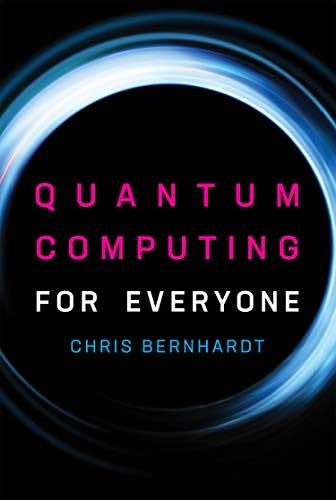
Quantum Computing for Everyone Beginner

Quantum Computing for Everyone

The clearest plain-English primer — perfect for making sense of quantum computing news.

Check price on Amazon (opens in a new tab)

Browse all recommended resources